

10-Min Activated Carbon Cabin Air Filter for Fresh Air

Cabin air filter replacement is an easy upgrade that helps cut odors and trap dust so your daily commute feels cleaner in minutes.
If turning on your A/C feels less like “fresh breeze” and more like “did something spill in here three months ago?”, your car is probably begging for a cabin air filter replacement. That little filter works quietly behind the scenes, trapping dust, pollen, and odor-causing gunk—until it gets clogged and your interior air quality starts to suffer. The good news is you don’t need a mechanic, a full toolbox, or a weekend project to fix it. A 10-minute cabin air filter swap can be one of the fastest, most satisfying upgrades you can make for daily comfort.
In this guide, we’ll break down how an activated carbon cabin air filter helps deliver cleaner, fresher air by capturing contaminants that create stubborn smells, while still supporting strong airflow for your HVAC system. If you’re searching for the best cabin air filter for a smoother commute—especially during allergy season—activated carbon is a smart choice for reducing odors and improving cabin air freshness. We’ll also cover quick install tips, how to follow the airflow arrow correctly (because “installed backwards” is not a flex), and when to replace your car cabin air filter based on mileage and driving conditions.
learn more
Activated carbon car air filter
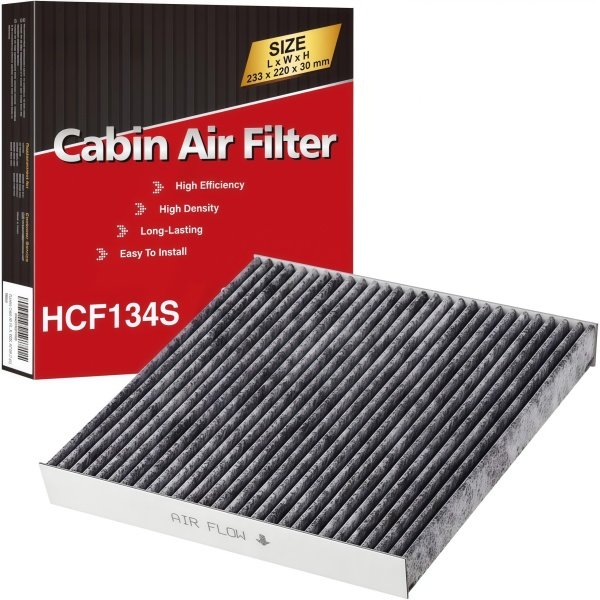
Effective protection (and fewer “what’s that smell?” moments): This Puroma cabin air filter uses soda woven media plus activated carbon to trap odor-causing contaminants and help deliver cleaner, fresher air for drivers and passengers. It’s a simple upgrade for car air filter replacement that makes daily commutes noticeably more pleasant.
Efficient filtration: A close-meshed, non-woven filter layer helps block particles from entering the cabin while supporting strong airflow. That means better protection for your vehicle’s interior air quality and smoother performance from your HVAC system—your A/C and heater can breathe easier, so you can too.
Enhances HVAC performance: For best results, replace your cabin filter about once a year or every 12,000 miles. If you drive in heavy pollution or on dusty/dirt roads, consider changing it around every 5,000 miles to keep airflow and filtration strong.
Easy 10-minute install: Designed for a precise fit and quick installation. The airflow arrow on the side makes direction foolproof (because nobody wants “installed backwards” as their weekend project). Check vehicle fitment before purchase.
Compatible vehicles: Acura ILX (2013–2022), MDX (2007–2020), RDX (2007–2018), RL (2005–2012), RLX (2014–2020), TL (2004–2014), TLX (2015–2020), TSX (2004–2014), ZDX (2010–2013). Honda Accord (2003–2022), Accord Crosstour (2010–2011), Civic (2006–2015), Crosstour (2012–2015), CR-V (2007–2016), Odyssey (2005–2017), Passport (2019–2025), Pilot (2009–2022), Ridgeline (2006–2014, 2017–2025).
Why we choose it
We choose this activated carbon cabin air filter because it balances odor control, strong filtration, and high airflow—an easy, budget-friendly way to improve cabin air quality and HVAC efficiency in minutes.
In summary
To wrap it up, if your car’s interior air has been giving “mystery smell” vibes—especially when you turn on the A/C—this Puroma cabin air filter is one of the simplest fixes with the biggest day-to-day payoff. The soda woven media plus activated carbon cabin air filter design helps trap odor-causing contaminants and airborne gunk, so your commute smells fresher and feels cleaner. It’s an easy win for anyone searching for a reliable car cabin air filter replacement that improves comfort without requiring a mechanic, a toolbox collection, or a dramatic afternoon in the driveway.
Beyond odor control, the close-meshed non-woven layer supports efficient filtration while keeping airflow strong. That means your HVAC system isn’t struggling to breathe through a clogged filter—your heater and A/C can run smoother, and you get better cabin comfort year-round. As a general rule, replacing your cabin air filter about once a year or every 12,000 miles keeps performance consistent. If you’re driving in dusty areas, heavy traffic pollution, or dirt roads, swapping closer to every 5,000 miles can help maintain airflow and keep that “fresh air” feeling from fading.
Installation is also refreshingly painless: it’s built for a precise fit, takes about 10 minutes, and the airflow arrow helps prevent the classic “installed backwards” mistake. It’s compatible with many Acura and Honda models (including Accord, Civic, CR-V, Pilot, Odyssey, Ridgeline, and more), making it a practical choice for a wide range of drivers.
For step-by-step fitment checks, install tips, and replacement intervals by driving conditions, refer to the Cabin Air Filter Replacement Guide