
Brake caliper compression tool, essential for car repair

brake caliper compression tool for brake pad replacement
If you’ve ever tried a brake job without the right tools, you know the caliper piston has two moods: “won’t budge” and “oops, now it’s crooked.” That’s exactly why a brake caliper compression tool is an essential piece of car repair gear. This simple brake piston compressor tool helps you push (and on many rear calipers, rotate) the piston back smoothly, creating the clearance you need for a clean brake pad replacement—without wrestling a C-clamp like it’s a medieval workout.
For DIYers and shop techs alike, a proper brake caliper tool kit reduces the risk of torn boots, uneven piston retraction, and that lovely moment when new pads “almost fit” but not quite. It’s especially useful for disc brake systems where tight tolerances make forcing parts a bad idea. In this guide, we’ll explain how a brake caliper piston tool works, what features matter (adapter variety, left/right-hand threads, build quality), and a few tips to keep your brake service smooth, safe, and mostly free of dramatic garage comedy.
learn more
Brake caliper compression tool
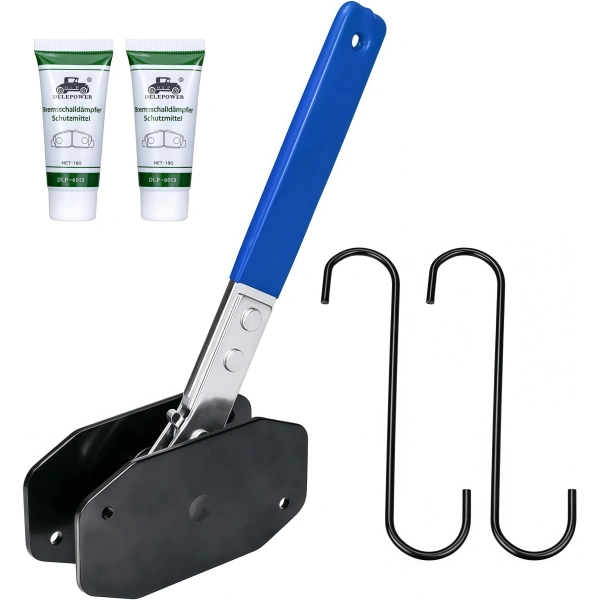
This brake caliper compression tool is the kind of “small tool, big attitude” upgrade that makes brake pad replacement feel less like wrestling and more like actual maintenance. Forged from high-grade carbon steel, it’s built for professional-level durability and repeated DIY auto repair use—because your caliper piston tool shouldn’t quit before the job does.
The star feature is the 360° dual-action ratcheting system. It lets you compress and retract pistons with one hand and switch modes easily, helping keep piston movement smooth and aligned (translation: fewer crooked pistons and fewer creative words). The ratcheting mechanism applies pressure evenly across the piston face, reducing the risk of damage during disc brake service and making caliper work safer and more controlled.
Compatibility is broad: this universal brake caliper tool works with single-, twin-, and quad-piston calipers on most fixed and floating disc brake systems, so it’s a practical choice for drivers who service multiple vehicles or switch between cars in the family fleet.
It also comes with helpful extras: 4 heavy-duty caliper hooks to hang and secure components during service, plus a pair of work gloves for hand protection—because scraped knuckles aren’t a badge of honor, they’re just annoying.
Why we chose it: It combines durable carbon-steel build, a smooth 360° ratcheting design, wide caliper compatibility, and safety accessories—making it a reliable, time-saving caliper piston compressor for cleaner, faster brake jobs.
In summary
To wrap up, a brake caliper compression tool is one of those “small tool, big attitude” upgrades that turns brake pad replacement from a wrestling match into calm, predictable disc brake service. Built from high-grade carbon steel, this caliper piston tool is designed for repeat use in both professional garages and DIY auto repair—because the only thing that should be exhausted after a brake job is the old pads, not your patience.
The standout feature is the 360° dual-action ratcheting system. It lets you compress and retract the piston smoothly, often with one-hand control, and switch modes quickly without awkward repositioning. That even, controlled pressure helps keep the piston aligned as it moves back into the bore—meaning fewer crooked pistons, fewer torn boots, and fewer “why won’t this fit?” moments when you’re trying to seat the caliper over new pads. In plain terms: it’s a safer, cleaner way to do caliper work than forcing it with improvised tools.
Compatibility is another practical win. This universal brake caliper tool works with many single-, twin-, and quad-piston calipers on both fixed and floating disc brake systems, making it a solid option for families with multiple vehicles or anyone who likes to help friends “real quick” (famous last words). The included caliper hooks are also a thoughtful touch for hanging components during service, and the gloves help keep your hands protected—because scraped knuckles aren’t proof of skill, they’re just inconvenient.